How to Build an Audience Before Publishing a Book
By The PageSwipe Team · 5 August 2026
The hardest part of publishing a book is not writing it. It is the quiet fear that on launch day you will press "publish" and nothing will happen — no reviews, no early readers, no one to tell. That silence is almost always the result of one thing: the audience was left until the end. This is a practical, honest guide to building an audience before you publish, so that launch day starts with readers already waiting rather than a room you have to fill from scratch.
The short answer
You build an audience before publishing by starting early and staying in steady contact with a small group of readers who genuinely want your book — long before it exists. In practice that means: research your comparable titles so you know exactly who your reader is; start an email list with a free reader magnet; share the journey openly so people can follow along; invite beta and ARC readers from that group; and give those readers one pre-launch home where they can gather and, at launch, recommend the book onward into their own circles. No single tactic builds an audience overnight. The compounding of small, repeated contact does.
TL;DR
- Start early. Six to twelve months before launch is ideal; start today if you are closer than that.
- Know your reader. Comps research tells you exactly who you are building an audience of.
- Own the connection. An email list beats rented social reach, because you control it.
- Build in public. Sharing the process turns strangers into people who feel invested.
- Line up beta and ARC readers from the audience you are already growing — honestly, never paid reviews.
- Give readers a home. A pre-launch page and club is where interested readers gather and become the people who recommend the book at launch.
Why "before" matters so much
An audience is not a thing you switch on. It is a set of relationships that take time to form, and time is the one ingredient you cannot buy back in launch week. Readers rarely go from "never heard of you" to "bought your book and told three friends" in a single sitting. They usually need several small touches — a chapter they enjoyed, an email they opened, a behind-the-scenes update they found charming — before they act.
Starting early does two things. First, it gives those touches room to accumulate, so that by launch you have warm readers rather than cold prospects. Second, it lets you learn who your reader actually is while you can still shape the book, the cover and the description around them. An audience built in the final fortnight is really just an announcement shouted into a void. An audience built over months is a crowd that has been quietly waiting for the day.
How to build an audience before publishing: the process
Here is the sequence we would follow, roughly in order. You do not need to do all of it, and you certainly do not need to do it perfectly. Consistency matters far more than polish.
1. Research your comps so you know who you are building for
Before you can gather readers, you need to know which readers. Comparable titles — "comps" — are the published books most like yours in genre, tone and audience. Study a handful closely: read their reviews, note what readers praise and complain about, look at where those readers gather, and read the book descriptions that sell them. This is not about copying; it is about locating the specific shelf your book belongs on and the specific person who reaches for it. Everything downstream — your reader magnet, your updates, your book description — gets sharper when you can picture that one reader clearly.
2. Start an email list with a reader magnet
If you do one thing on this list, do this. An email list is the only audience you truly own: no algorithm sits between you and the reader, and no platform can quietly throttle your reach. The reliable way to grow one before you have a book to sell is a reader magnet — a free piece of writing readers actually want, given in exchange for an email address. A short story set in your world, the first three chapters, a prequel novella, or a useful companion guide for non-fiction all work. The trade is simple and fair: something of real value now, in return for permission to write to them later. Then email that list on a steady rhythm — monthly is plenty — so the relationship stays warm rather than going cold between the sign-up and the launch.
3. Share the journey — build in public
People do not just buy books; they buy into the person and the process behind them. "Building in public" simply means letting readers see the work as it happens: the research rabbit-holes, the cover options you are torn between, the word-count climb, the scene that finally clicked. You can do this wherever you are comfortable — a newsletter, a blog, a single social platform you will actually keep up with. The point is not to be everywhere. It is to be somewhere, consistently, in a way that lets a reader feel they are part of the story of the book, not just a target for it. By launch, those readers are not strangers. They watched it get made.
4. Line up beta readers and ARC readers
Two groups of early readers matter enormously. Beta readers read a draft while you can still change it, and their feedback makes the book better. ARC readers (advance review copy) read a near-final version shortly before launch, so that on day one there are honest reviews and early word of mouth rather than silence. Draw both from the audience you have already been building — your email list and the people following along are the natural pool. Be explicit about what you are asking for, and be honest: you want genuine, honest reactions and reviews, never paid, swapped or guaranteed-positive ones. A handful of authentic early reviews from readers who truly engaged is worth more than a pile of manufactured five stars, and it keeps your launch on the right side of every retailer's rules.
5. Give your readers one place to gather before launch
By now you may have subscribers in an email tool, followers on a social platform, and beta readers in a scattered set of inboxes. The missing piece is a single home — one place where interested readers can gather around the book itself, follow its progress, and, crucially, be ready to recommend it onward the moment it launches. A pre-launch community turns a list of individual contacts into a group that can talk to each other and spread the word into their own circles. That onward recommendation, from one real reader to the people who trust them, is how books travel.
Where PageSwipe fits — honestly
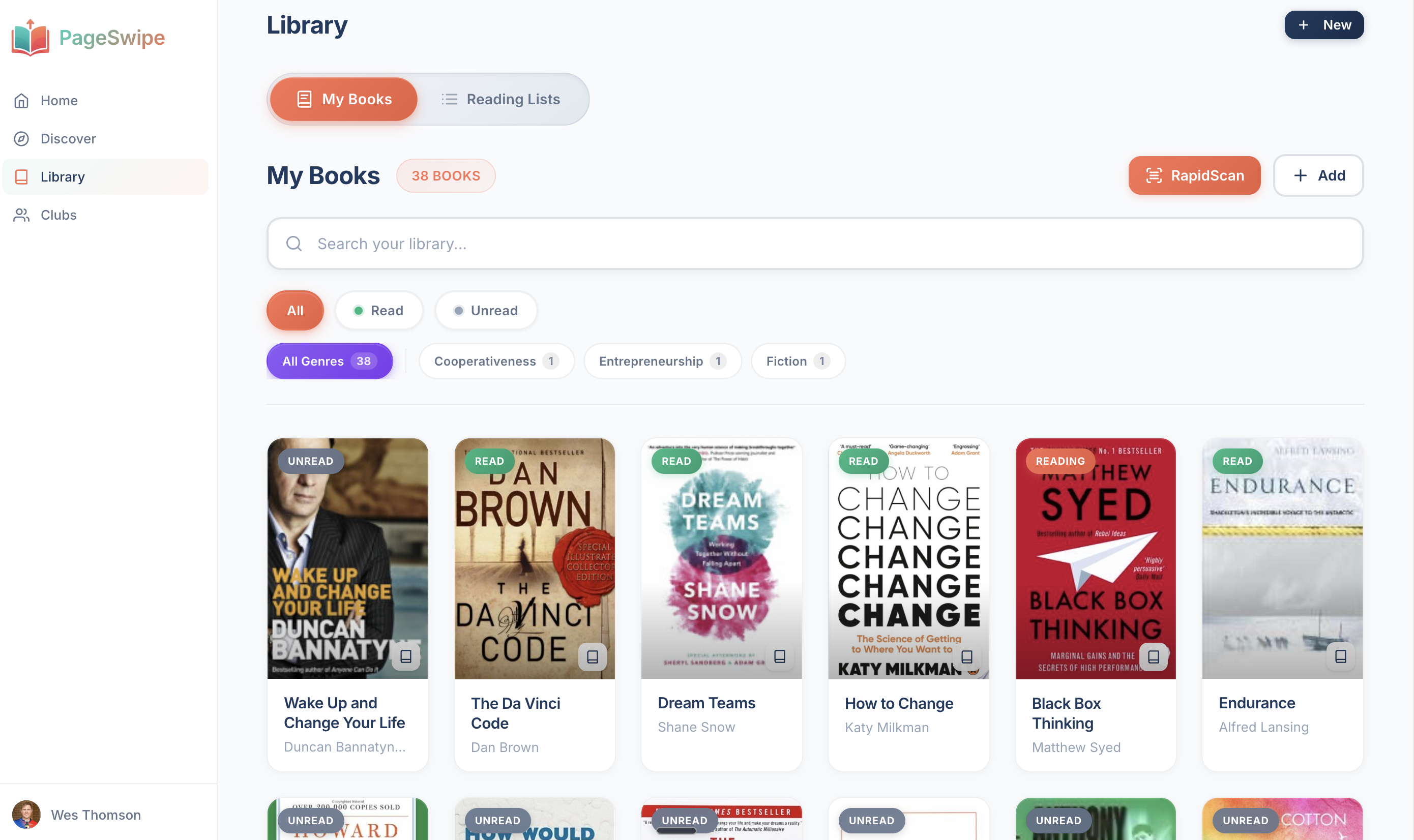
Here is the part where a lot of tools overpromise, so we will be plain about it. PageSwipe does not supply readers, and it cannot manufacture an audience for you. No platform can. What PageSwipe gives your book is a home: a place where the readers you invite can gather early, follow along, and recommend the book onward to the people they know.
Concretely, you can set two things up well before launch. You can create your official book page — cover, description, ISBN, and links to buy and read — so there is a real, shareable destination for every reader you bring in, instead of a placeholder that does nothing until launch day. And you can create a pre-launch club around the book, invite your email subscribers and beta readers into it, and let them get comfortable there in the weeks before release. When launch arrives, those readers are not being asked to discover you cold. They are already gathered, already warm, and — because a real person recommending a book to people who trust them is the most persuasive marketing there is — already positioned to recommend it into their own circles.
PageSwipe is a free platform for readers and authors: scanning, cataloguing, sharing, lending, clubs, collections, discovery, book pages, and launch clubs are not gated. PageSwipe earns revenue through book-native advertising with authors and publishing houses at scale.
A realistic pre-launch timeline
Every book and every author is different, so treat this as a map, not a rulebook. The dates matter less than the order and the steadiness. This is an illustrative timeline for a debut author starting roughly a year out.
| When (before launch) | Focus | What you actually do |
|---|---|---|
| 12–9 months | Foundations | Research comps and pin down your exact reader. Start an email list. Create a reader magnet to give away. |
| 9–6 months | Presence | Begin building in public. Email your list on a steady rhythm. Pick one platform you will keep up with. |
| 6–3 months | Gather | Set up your book page and a pre-launch club. Invite subscribers in. Recruit beta readers from that group. |
| 3–1 months | Warm up | Send ARCs to your most engaged readers. Ask for honest reviews. Keep the club active with updates and questions. |
| Launch week | Release | Publish. Point everyone to the book page. Make it easy for readers to recommend it onward to their own circles. |
| After launch | Sustain | Keep the club and list alive for the next book. An audience built once compounds across a career. |
Illustrative timeline only. Compress it if your launch is sooner — a few engaged readers gathered in three months still beats none.
What to do if your launch is close
Not everyone reads this a year out. If you are weeks from publishing, do not try to do everything at once. Prioritise ruthlessly: start the email list today, put up a real book page so you have a destination to send people to, and personally invite the readers you already have — friends, early supporters, anyone who has expressed interest — into one place. A small, warm, gathered group of genuine readers beats a large, cold, scattered one. You can build the bigger audience properly for book two.
The mindset that makes it work
Building an audience before you publish is less a marketing campaign than a habit. It rewards the author who shows up for a small group, consistently, over months — not the one who blitzes for a fortnight and vanishes. Keep the promises small and keep them: one useful email, one honest update, one genuine invitation at a time. Do that, and by launch day you are speaking to people who have been waiting to hear that the book is finally here.
Frequently asked questions
How early should I start building an audience before publishing a book?
Start as early as you reasonably can — six to twelve months before launch is a common window, and earlier is better for a debut. An audience is built through small, repeated contact over time, not in a launch-week sprint. If your book is closer than that, start today anyway: a modest list of genuinely interested readers gathered in a few months beats no list at all.
Do I need a big social media following to build an audience before launch?
No. A large following helps, but it is not required and it is not the goal. What matters is a smaller group of readers who actually want your specific book and have a way to hear from you and to tell others. An email list of a few hundred engaged readers, plus a place where they can gather and recommend the book onward, is worth more at launch than a large but passive follower count.
What is a reader magnet and do I need one?
A reader magnet is a free piece of writing — a short story, a first chapter, a novella, a companion guide — that you give away in exchange for an email address. It turns a passive browser into a subscriber you can reach again. You do not strictly need one, but it is one of the most reliable ways to build a pre-launch email list, because it offers something of real value up front rather than simply asking people to sign up.
How do I find beta readers and ARC readers before publishing?
Draw them from the audience you have already started building. Invite your email subscribers and the people following your progress to read an early draft (beta) or an advance copy near launch (ARC). Be clear about what you are asking for and honest about reviews — ask for genuine, honest feedback, never paid or guaranteed positive reviews. A pre-launch community gives these readers one place to gather, so you are not chasing individuals across scattered inboxes.
Can a book platform give me an audience before I publish?
No tool can hand you an audience — that claim is not true of PageSwipe or anyone else. What a platform can do is give your book a home where the readers you invite can gather early, follow along, and recommend the book onward into their own circles at launch. You bring the readers; the platform gives them a place to stand and a way to spread the word. Building an audience is still your work; the right home just makes that work compound.
Related reading
Give your readers a home before launch day
An audience built before you publish is the difference between a launch that lands and a launch that echoes. You do the real work — the writing, the emails, the honest invitations — and no tool can do that for you or hand you readers you have not earned. What you can do today is give the readers you gather a place to stand: a real book page they can find, and a club they can join long before release, so that on launch day they are ready to recommend the book to the people who trust them.
Create your free PageSwipe book page and set up a pre-launch club now — free, with no cap on the readers you invite — so your audience has somewhere to gather well before the book arrives.