How to Promote a Book When Nobody Knows Your Name
By The PageSwipe Team · 1 August 2026
If nobody knows your name yet, you are not behind — you are exactly where almost every author starts. To promote a book as an unknown author you don't need a huge platform or a marketing budget. You need to borrow trust you haven't personally earned yet, start with a tiny group of real readers, make the book genuinely good and genuinely easy to recommend, and then let each reader hand it to the next. That is how word of mouth is built from zero.
This guide is honest about what works and what doesn't. There is no trick that conjures readers out of nowhere. What there is — reliably — is a sequence of small, compounding moves that turn a handful of people who like your book into a slowly widening circle of people who recommend it.
Why being unknown is normal — and not the problem you think it is
Every author you admire was, at one point, a name that meant nothing to a bookseller or a stranger. Being unknown feels like a disadvantage you have to overcome before anything else can happen. It isn't. It is simply the default state of a first book, and the readers you're hoping to reach don't hold it against you — they've never given it a thought. Nobody opens a book and decides against it because the author wasn't famous; they decide based on whether the book looks like something they'd enjoy and whether someone they trust nudged them toward it.
The real problem isn't obscurity. It's that an unknown author has no stored trust to spend. When a well-known writer says "my new book is out," that sentence carries years of reputation behind it. When you say it, it's just a claim. So the entire game of promoting a first book is not about shouting louder — it's about sourcing trust from somewhere other than your own reputation, because you haven't built that reputation yet. Once you see the task that way, the tactics stop feeling like self-promotion and start feeling like introductions.
The core idea: borrow trust you haven't earned yet
Readers act on trust. Since they don't yet trust you, you attach your book to things they already do trust. There are four dependable sources, and the strongest campaigns use all four at once rather than betting everything on one.
| Source of borrowed trust | Why readers believe it | How an unknown author uses it |
|---|---|---|
| Communities | People trust the group they already belong to | Show up in reader communities and book clubs where your topic already lives — as a member first, not an advertiser |
| Honest reviews | A real reader's verdict outweighs the author's | Get the book into the hands of readers who will finish it and say what they think, in public |
| Comparison ("comp") titles | A known book tells readers what to expect | Describe your book by the ones it resembles: "for readers of X and Y" |
| Collaborations | A small creator's audience trusts that creator | Swap audiences honestly with other early-stage authors, newsletters, or podcasters in your niche |
Notice what none of these require: fame, money, or a large following. They require patience and a book worth recommending. That's the trade you're making as an unknown author — you replace reach you don't have with trust you can borrow.
Communities before campaigns
The fastest way to reach readers you don't know is through a community that already trusts each other. Find the places where people who'd like your book already gather — a genre forum, a local book club, a subreddit, a Discord, a niche newsletter — and become a genuine part of them long before you mention your book. When you eventually do, you're not a stranger interrupting; you're a member sharing something. The order matters: contribute first, promote second, and never reverse it.
Reviews are trust made visible
A handful of honest reviews from real readers does more for an unknown book than any amount of self-description. They should be honest — never swap reviews, pay for positive ones, or coordinate ratings; readers can smell manufactured praise, and one exposed fake undoes all of it. Send advance copies to people who genuinely read your genre and ask only for their honest reaction. A three-star review a reader believes is worth more than a five-star one they don't.
Comp titles do the explaining for you
Readers decide fast, and "it's a bit like [book they love]" is the fastest explanation there is. Naming two well-chosen comparison titles borrows their positioning: it tells a reader what shelf your book lives on and what feeling to expect, without you having to earn that shorthand yourself. Use it in your description, your pitch to clubs, and your book's page.
Collaborate with people at your level
You don't need a famous friend. Two authors with small audiences who introduce each other's books honestly both come out ahead — each borrows the other's trust. The same goes for a niche newsletter writer or a small podcaster whose audience overlaps yours. Look sideways, not up.
Start tiny and let it compound
The instinct with a first book is to try to reach everyone at once. It almost never works, because you have nothing to amplify yet. Word of mouth compounds — but it needs a first mouth. Your job at the start is not to reach thousands; it's to reach ten real readers who finish the book and like it enough to tell one person each. Do that, and you have twenty. The maths is unglamorous and slow at first, and then it isn't.
Here is a realistic sequence for going from zero to a small, self-sustaining circle:
- List the readers you already have. Friends, family, colleagues, anyone who has ever said "let me know when it's out." This is not cheating — it's your first mouth. Even five people count.
- Make the book genuinely good. No promotion survives contact with a book that isn't ready. Edit it, get honest feedback, fix the cover if it looks self-made. Everything downstream depends on this.
- Give the book one credible home to point at. A single link with the cover, a sharp description, comp titles, and where to buy or read it — so every conversation ends somewhere concrete.
- Invite your first readers into one place. Gather them somewhere they can talk about the book together, not scatter them across replies you'll never track.
- Make recommending effortless. Give readers a link and a reason. "If you liked it, the easiest thing is to send this to one person who'd like it too."
- Repeat with each new reader. Every person the book reaches is a potential new first mouth. Treat the tenth reader with the same care as the first.
For more on doing this without a big platform, see our companion guides on how to find readers without a large social following and how to get people to read your self-published book.
Make the book genuinely good — and genuinely easy to recommend
Two things are doing the real work in every plan above, and both are within your control as an unknown author. The first is that the book is good. Nothing on this page rescues a book that readers don't finish; a great campaign around a weak book just helps more people put it down. The second, which authors underrate, is that the book is easy to recommend.
Easy to recommend means a reader who loved it can pass it on in one sentence and one link. It means the cover reads clearly at thumbnail size, the description says what the book is without hype, the comp titles are there, and there is a single, credible place to send someone that answers "what is this and where do I get it?" in ten seconds. Every bit of friction between "I loved it" and "here, read this" is a recommendation that doesn't happen. Removing that friction is quiet, unglamorous work, and it is often the difference between a book that spreads and one that stalls.
Where PageSwipe fits — honestly
Here's the honest part, because it matters. PageSwipe does not supply readers, and it will not manufacture an audience for you. No tool can. What it does is give your book the two things this whole guide keeps pointing at: a credible home and a place for your first readers to gather and recommend it onward.
The home is an official book page — cover, description, ISBN, and purchase and reading links — the single credible link you point every conversation toward. The gathering place is a launch club: you invite the readers you already have, however few, and they discuss the book, answer each other's questions, and — this is the point — recommend it to their own clubs and circles. Because PageSwipe is a connected network of real readers, a recommendation lands as "someone I trust vouched for this," not as an unknown author shouting into a feed. And a peer's recommendation beats your own promotion every time.
You seed it; the readers spread it. You bring the first ten people; the tool makes it easy for each of them to bring the next one. Creating a book page and a launch club is free — there's no gate on setting up your book's home or its community. If you want to see how authors turn a published book into a reader community, start on the PageSwipe for authors page, or read how we frame it for promoting a self-published book. Readers who join can also recommend your book to the book clubs they already run.
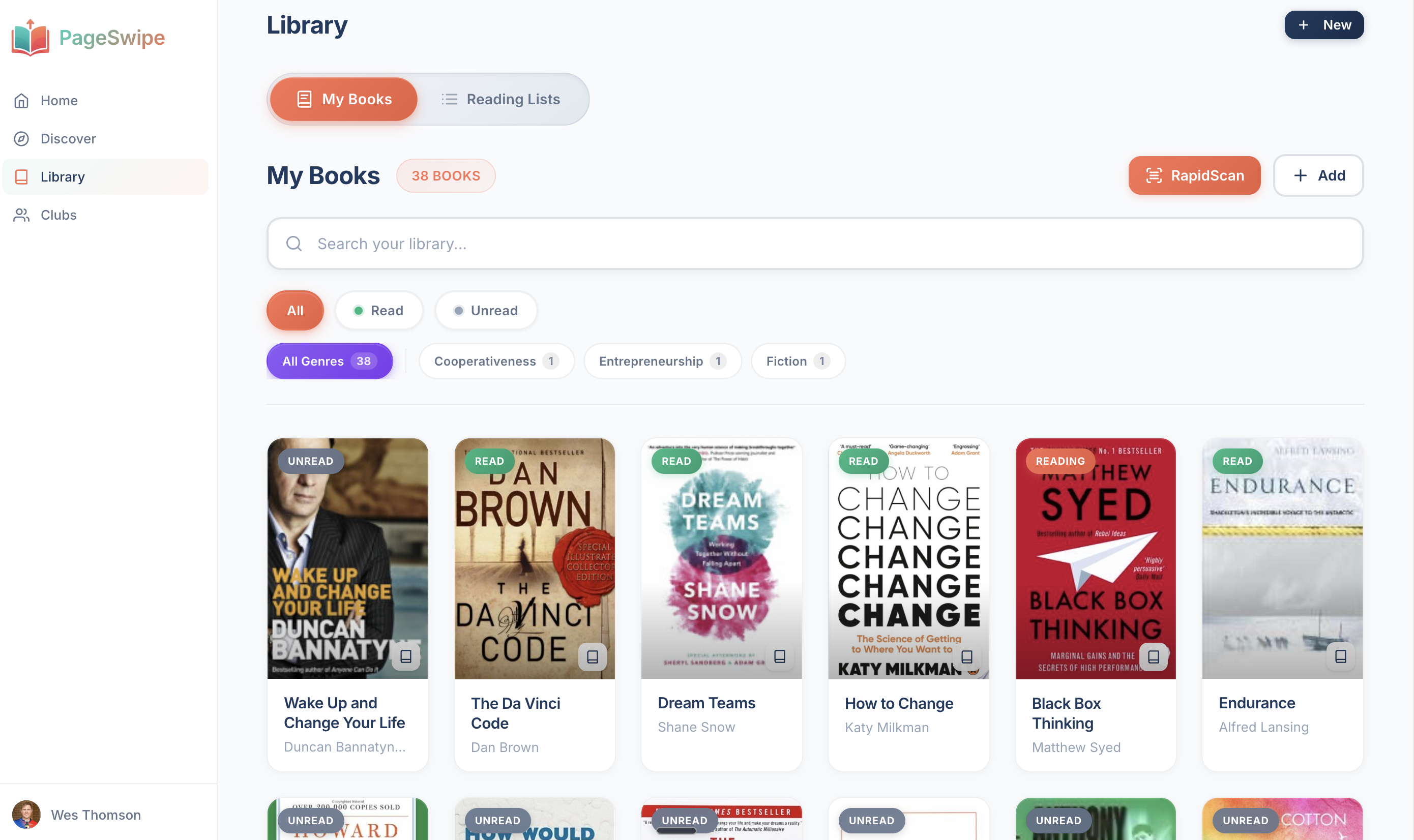
Give your book a credible home to point every reader toward: create your free PageSwipe book page, then invite your first readers into a launch club where they can vouch for it onward. More on the author side at promote your self-published book, or start from pageswipe.tech.
Frequently asked questions
How do you promote a book when nobody knows your name?
You borrow trust instead of demanding it. Because no one knows you yet, your own claims about the book carry little weight — so you lean on things readers already trust: communities they belong to, honest reviews from real readers, comparison titles that signal what your book is like, and collaborations with people who have a small audience. You start tiny with a handful of genuine readers, make the book genuinely good and easy to recommend, and let each reader pass it to the next. Recommendation from a peer beats an unknown author's own shouting.
Do I need a big social media following to sell my first book?
No. A large following helps, but plenty of first books find readers with no platform at all. What matters more is that a small number of real readers finish the book, like it, and recommend it to people who trust them. A warm recommendation from one friend converts far better than a post to thousands of strangers. Focus on making the book easy to recommend and giving early readers an easy way to do it.
What does it mean to borrow trust as an unknown author?
Borrowing trust means attaching your unknown book to sources readers already believe. That includes honest reader reviews, comparison ("comp") titles that tell readers what to expect, existing communities and book clubs where the topic already lives, and collaborations with other small creators. Each of these lends your book credibility you haven't personally earned yet, which is exactly what an unknown name lacks.
How does PageSwipe help an unknown author promote a book?
PageSwipe gives your book a credible home page — cover, description, ISBN, purchase and reading links — and a launch club where your first readers gather, discuss it, and recommend it onward to their own circles. It does not supply readers or manufacture an audience; you invite the readers you already have, however few, and the tool makes it easy for them to vouch for the book to people who trust them. Creating a book page and a club is free.
Start with a home, not a megaphone. Create your free PageSwipe book page, invite the first readers you already have, and let their recommendations do the work your name can't do yet.