How to Get People to Read Your Self-Published Book
By The PageSwipe Team · 8 July 2026
You wrote the book. It's edited, the cover looks right, it's live on the retailers — and almost nobody is reading it. This is the quiet reality of self-publishing that no launch checklist warns you about: publishing a book and getting people to read it are two completely different jobs. The good news is that the second job is mostly craft and persistence, not luck.
To get people to read your self-published book, you lower the friction to starting it, ask the people who already know you directly and specifically, give strangers a low-risk way to try your writing, and then build enough early momentum that the book starts recommending itself. This guide walks through each of those in order, honestly — including the review tactics you should never touch — and ends with how a tool like PageSwipe fits, without pretending it hands you an audience you haven't earned.
First, understand why "publishing" isn't "being read"
A self-published book starts with an audience of zero. There is no publisher's catalogue putting it in front of buyers, no bookshop table, no reps calling stores. Discovery is entirely on you, and a listing on a retailer is not discovery — it's a shelf in a warehouse the size of a country.
So the whole task reduces to a simple chain: someone has to hear about the book, feel enough curiosity to try it, face little enough friction that they actually start, and then care enough to tell someone else. Break any link in that chain and the reader is lost. Everything below is about strengthening one of those four links.
1. Lower the friction to starting your book
Every extra step between "I'm curious" and "I'm reading" loses people. Your job is to remove as many of those steps as you can.
- Give away a real sample. A free first chapter or the opening 10–15% lets someone try your actual writing at zero risk. Prose sells prose better than any blurb.
- Use one-tap links. Every time your book is mentioned — email, bio, social, a talk — there should be a single link that goes straight to where they can read or buy it. Not "search my name on Amazon." A link.
- Meet readers where they are. If your readers live in ebooks, make the ebook effortless to get. If they're print people, have a paperback link ready. Don't force a format.
- Kill the small hoops. A newsletter signup wall before the sample, a clunky PDF, a link that 404s — each one quietly costs you readers. Test your own path from post to page.
Friction is invisible to you because you already know how to get the book. Watch one friend try to reach it cold and you'll find three steps you didn't know were there.
2. Ask directly — the lever most authors skip
The most effective thing you can do to get people to read your book is also the most uncomfortable: ask them, individually, by name. Not a broadcast "my book is out!" post that everyone scrolls past — a specific message to a specific person: "I wrote this. I'd love for you to read it, and I'd really value your honest thoughts."
A personal ask converts many times better than a public announcement because it carries an implicit relationship and a small sense of obligation, in the good sense. Ten personal messages will out-perform a post that reaches a thousand people. Make a list of everyone who might plausibly care, and work through it a few at a time.
Be specific about what you're asking for. "Read it if you get a chance" gets nothing done. "Would you read it this month and tell me one thing that landed and one that didn't?" gives a person a clear, finite task — and people finish clear tasks.
3. Leverage the contacts you already have
You are not starting from zero readers, even if you're starting from zero strangers. You have colleagues, old classmates, family, a group chat, a professional network, former teammates, the people who followed your writing before there was a book. These are your warmest readers and your first recommenders.
Concentrate your early effort here for two reasons. First, they're the most likely to actually finish the book. Second — and this matters more — they're the people who can put it in front of the strangers you can't reach. One enthusiastic reader who runs a book club, teaches a class, or has a relevant audience is worth more than a hundred cold impressions.
If your existing network genuinely is small or new, that's a different starting problem, and we cover it directly in how to promote a book when nobody knows your name and in how to find readers for your first book.
4. Build a reader magnet
A reader magnet is something you give away free to turn a curious stranger into a reader — and, ideally, into a contact you can reach again. It's the bridge between "someone heard of you" and "someone is reading you."
Good reader magnets include:
- A free first chapter or generous sample — the simplest and most direct.
- A short prequel or side story — for fiction, a self-contained taste of the world and voice.
- A companion guide, checklist or resource — for non-fiction, something genuinely useful that only makes sense because you wrote the book.
- A discussion or reading guide — especially useful if you want book clubs to pick the book up (more on that next).
The magnet does two jobs at once: it lets people try your writing risk-free, and it gives you a reason to stay in touch with the ones who liked it, so a single moment of interest doesn't evaporate.
5. Get your book into book clubs
A book club is the highest-leverage reader you can find, because it's not one reader — it's a whole group who read the same book at the same time and then talk about it. That conversation is exactly the word-of-mouth self-published books live and die on.
To make your book club-friendly, do the work that helps a group say yes:
- Write discussion questions. A ready-made set of thoughtful questions removes the effort for whoever runs the club, and makes your book the easy pick.
- Offer to join a session. A short author visit — even by video — turns an ordinary read into an event, and every member becomes a potential recommender.
- Make group access easy. Clear buy links, and a place where the group can gather around the book, lower the barrier to choosing it.
You don't need to find famous clubs. A handful of small reading groups, each recommending onward, compounds. If you want to understand how the reader side of this works, the book club app page shows how groups organise a shared read, vote on what to read next, and pass recommendations between members.
6. Earn honest reviews — and never fake them
Reviews are social proof: they tell the next reader that real people finished the book and rated it. They're worth pursuing, but only one way — honestly.
Do: ask real readers to leave a review after they finish, remind them once with a direct link, and accept that some reviews will be lukewarm. A book with a spread of genuine ratings reads as trustworthy. Reviews from people who actually read the book are the only ones that help you in the long run.
Never: buy reviews, pay for guaranteed five-star ratings, or run "review swap" rings where authors trade positive reviews regardless of whether they read each other's books. Retailers actively detect and remove faked reviews and can delist a book for it, and — more fundamentally — dishonest reviews mislead the exact readers you're trying to earn. Ten honest reviews are worth more than a hundred hollow ones, and they won't get your book pulled.
7. Build and protect momentum
Reads beget reads. A book with visible activity — recent reviews, people talking about it, a club reading it — is far easier for a new reader to commit to than one that looks abandoned. So the goal isn't just to collect readers, it's to concentrate them enough that the book has a pulse.
- Cluster your launch. Rather than a trickle, line up your personal asks, your reader-magnet sign-ups, and a club or two to land close together, so early activity is visible at once.
- Give readers a way to gather. When readers can see each other reading and recommending the same book, they reinforce each other and pull in the next person.
- Keep going after launch week. Self-published books usually build slowly. A steady drumbeat of small asks over months beats one big day and silence after.
A simple plan you can run this week
Here's the whole thing as a sequence you can start immediately, whatever stage your book is at.
- Fix the friction. Get a free sample and a single, working buy-or-read link in place. Test the path yourself, cold.
- List 20 people. Write down twenty individuals who might genuinely care, and send each a specific, personal ask this week.
- Make one reader magnet. Package your first chapter or a short companion piece to give away.
- Write discussion questions. Even five good ones make your book club-ready.
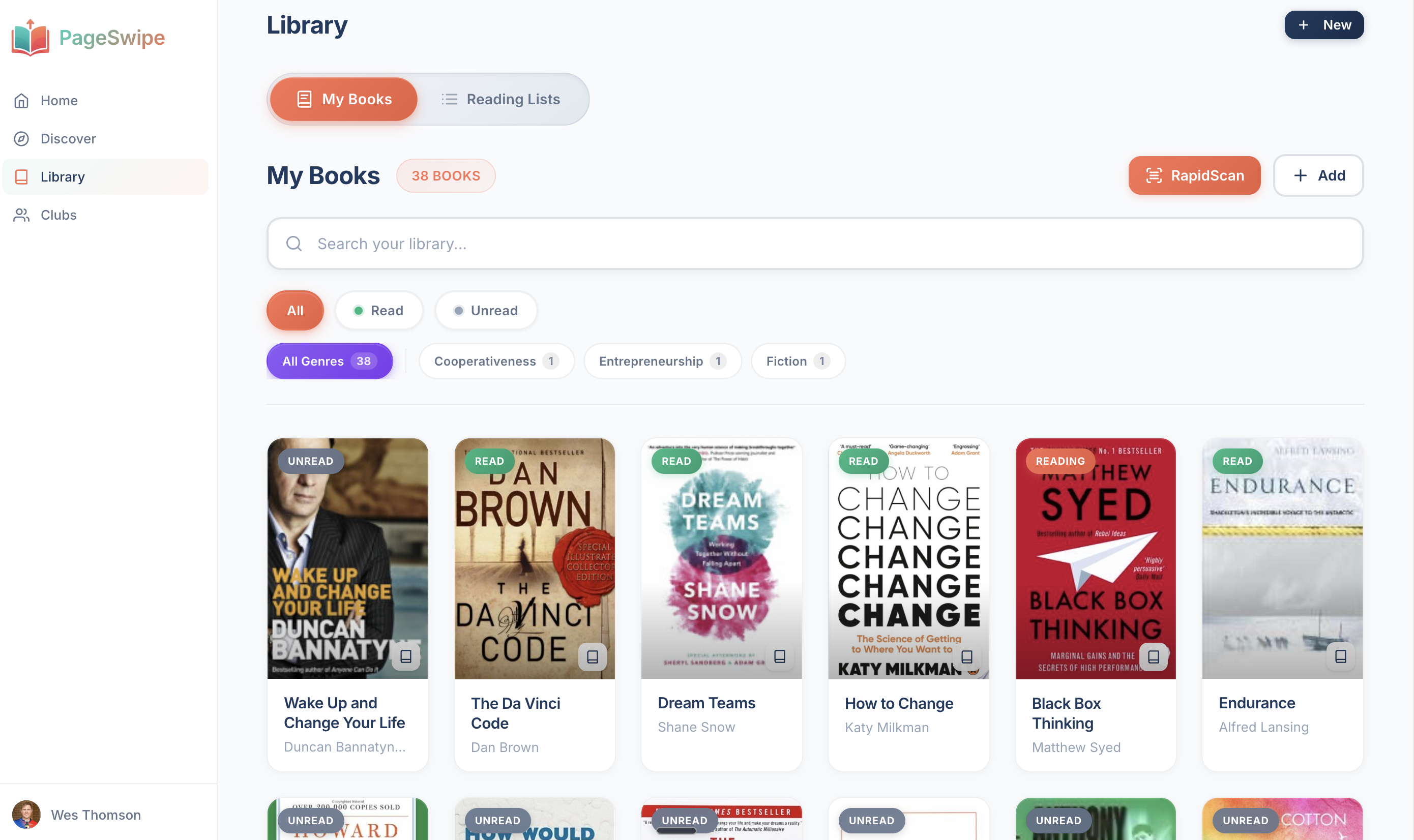
- Set up a home for the book. One page where readers can find it, see who else is reading, and pass it on.
- Ask finishers for honest reviews. One reminder, one link, no manipulation.
- Repeat weekly. Another handful of asks, another club, another magnet download. Momentum is a habit, not an event.
If you'd like this as a printable step-by-step, our free book launch checklist lays the whole sequence out so you can tick it off as you go.
Where PageSwipe fits — honestly
Here's the honest part, because it's the part that matters most. PageSwipe does not find readers for you. It does not supply, buy, or manufacture an audience. No tool does, and anything that claims to is selling you attention that won't finish your book. What PageSwipe gives your book is a home — a place for the readers you invite to gather, take part, and spread the book into their own circles.
Concretely, as a self-published author you can:
- Create an official book page — cover, description, ISBN, and purchase and reading links — the single, shareable link you drop everywhere you mention the book.
- Start a launch club around the book, invite your own readers into it, and give them a space to read together rather than in isolation.
- Add discussion questions so your book is genuinely club-ready from day one.
- Let readers recommend it onward. When a reader who owns your book recommends it to their own club or circle, the book travels further than your own reach — because it came from a person they trust, not an ad.
That last point is the whole model, stated plainly: you bring your readers, PageSwipe gives them somewhere to become a community, and the community is what spreads the book. Creating a book page, a club, and inviting readers is free — cataloguing and network creation aren't gated. It's the place your momentum lives, not a substitute for building it.
Ready to give your book a home? Create your free PageSwipe book page, add your launch club and discussion questions, and invite the readers you already have. See how it works for authors on the promote your self-published book page, or learn more about PageSwipe.
Frequently asked questions
How do I get people to actually read my self-published book?
Make reading it as frictionless as possible, then ask directly. Give people a free sample or first chapter, put a one-tap buy-or-read link everywhere your book is mentioned, and personally invite the people who already know you rather than waiting for strangers to discover it. The single biggest lever most self-published authors ignore is simply asking the people closest to them, clearly and individually, to read and talk about the book.
How do I get reviews for my self-published book without buying them?
Ask real readers to leave an honest review after they finish, and make it easy with a direct link. Never buy reviews or trade guaranteed five-star ratings with other authors — retailers remove faked reviews and it can get a book delisted, and dishonest reviews mislead the readers you are trying to earn. Aim for genuine reviews from people who actually read the book, even if that means fewer of them at first.
What is a reader magnet and do self-published authors need one?
A reader magnet is something you give away free to turn a curious stranger into a reader and a contact — a free first chapter, a short prequel story, a companion guide, or a sample. It works because it lets people try your writing at no risk and gives you a way to stay in touch with people who liked it. For self-published authors with no built-in audience, a reader magnet is one of the most reliable ways to convert attention into actual readers.
Does PageSwipe find readers for my self-published book?
No. PageSwipe does not supply or manufacture an audience. It gives your book a home — a shareable book page, a launch club, and discussion questions — where the readers you invite can gather, participate, and recommend the book onward to their own circles. You still bring your readers; PageSwipe gives them a place to become a community and spread the book from there.
Give your book somewhere to be read. Create your free PageSwipe book page — add your launch club and discussion questions, and invite the readers you already have.